This article is a personal reflection from a MOSAIC staff member who supports seniors in Burnaby. In her own words, Sherry shares what she has learned through walking alongside older adults in our community, highlighting the wisdom, resilience, and strength she witnesses each day. The stories below offer a heartfelt look into the lives of the seniors our programs have supported.
By Sherry Shen, Community Coordinator, CARES for Seniors – Social Prescribing Program
The light has turned green, and you start crossing the road, faced with other pedestrians walking towards you. In the midst of these persons, an older adult is attempting to balance the gaits on the walking cane or walker, inching as fast as possible at a slower pace than most, attempting to beat the light that’s about to turn red.
As a pedestrian, do you consider helping this older adult to ensure s/he reaches across safely? As a driver, do you feel impatient towards the slower pace, or sorry and think: “Poor little old lady/man,” or a bit of both?
Have you even noticed the older adult?
These seems to be valid questions for any of us under the age of 65, especially since, as a savvy leader in the senior-serving nonprofit, and a panelist at SFU’s 32nd John K. Friesen Conference reminded us: “We are all seniors in training.”
We are all seniors in training. As a Community Connector with MOSAIC’s CARES program serving eligible seniors – be it Canadian-born or naturalized citizens, permanent or temporary residents, home owner or precariously housed, to name a few – in Burnaby, these words have never sounded truer to my ears. An essential part of our role is supporting older adults through a non-clinical model of care: being a resource and encouragement guide for the seniors to sustain a healthy, continued independent lifestyle for aging in place. While I aim to serve them this way, much of the time my closeness in my services with them seems to make me a trainee in appreciating, but especially, being courageous about aging myself.
In this “senior in training” role for the past 16 months, I am seeing – over and over – the mighty strength and values of each and every one of the older adults, female and male, healthy and frail. In Ms. Hon*, a senior who, at the time of this writing, is in palliative care, I see a walking treasured trove of wisdom and a portrait of some of the best expressions of humanity. Being seen, for any of us, but especially for seniors, is an essential human need. It is also a human right to recognize older adults’ abilities for self-determination, as key figures such as Isobel Mackenzie, BC’s first seniors advocate, and Margaret Young, a social entrepreneur who pushed the Elder Abuse Awareness of immigrant seniors onto United Nation’s radar would agree.
Trained in Western, Tibetan, & Chinese medicine, Ms. Hon has been seeing patients, applying deftly the integrated healing approaches with gentility and firmness felt from a doctor who’s genuinely caring and skillful. Even as she speaks no English and cannot practice medicine since immigrating to Canada 25 years ago, she continued caring for persons in need, bring forth all the strength and sound-minded training to benefit her new communities throughout Metro Vancouver in caregiver roles.
Ms. Hon lived through the political cruelty from home country that left her orphaned before age 5, and she endured significant emotional and physical hardship throughout her life. Despite these injustices and trajectories, and now at age 84 facing a terminal illness, she remains as thoughtful and generous as ever, not wishing to trouble or burden anyone from Canadian government for essential services in health and social connection.
Just last week, she told me: “My regret is that I couldn’t volunteer with your organization with the seniors or do more to help my volunteer visitor with his son’s autism.” Even at this stage, she still wishes she could do more to contribute to the Canadian society, the second home that she came to call it “the Western Land of Bliss” (in reference to her Buddhist practices) for more than two decades.
Two days before she was admitted into the Palliative Unit, at what became our last home visit with Fraser Health’s social worker and interpreter, she said: “I am so grateful and relieved that the Canadian government is taking such good care of us seniors who are alone, with limited income, and cannot speak the [English] language. This would have been unthinkable to ask for back home.” Having lived through unspeakable atrocities, she chose not to dwell on the discrimination encountered occasionally since immigrating, while sharing her express gratitude, and kept her composure in all her demeanors, being as clear minded as ever, and above all, compassionately holding together not just on her own but anyone who met with her.
Another example of living one’s strengths and values is Judy Donas, a Canadian-born, savvy businesswoman of 30+ years who also journeyed through innumerable numbers of heart-breaking events, yet is as grounding, outspoken, and forgiving, as always. As a former CARES program participant, Judy generously guided me to not only rich community resources in my early days into this role, but kept advocacy front and centre to this day. Not only was she keen to volunteer with us, she already contributed years of partnerships in community and research circles in Metro Vancouver and virtually, not the least being an “empathy angel” who cares for her neighbours’ wellbeing in her building. In my heart, she is still my mentor, all the more for my naivete, at times, with my work with the seniors.
Teacher Tsai, a former university arts professor prior to immigrating to Canada, also exemplifies strength and curiosity. After arrival, she taught art in local communities while raising two children: one now a business owner in Alberta and one in the humanitarian sector in Ontario. As a current program participant, she brings thoughtful insights into the Canadian health, arts, and municipal initiatives. She even travelled long distances to attend in-person collaborative initiatives with the Vancouver Art Gallery, BC Parks, and United Way BC, while savouring an outing to downtown Vancouver, an activity not many 80+ year old seniors get to enjoy on a regular basis. In October 2025, both teacher Tsai and Mr. Asef Shiba – an Afghan senior with CARES program – contributed key inputs with Dr. Grace Park and the social prescribing team at Fraser Health with UBC and SFU researchers around mental health for senior, providing essential representation of cross-cultural perspectives on how Mandarin- & Farsi- speaking communities may be serviced better from these research initiatives.
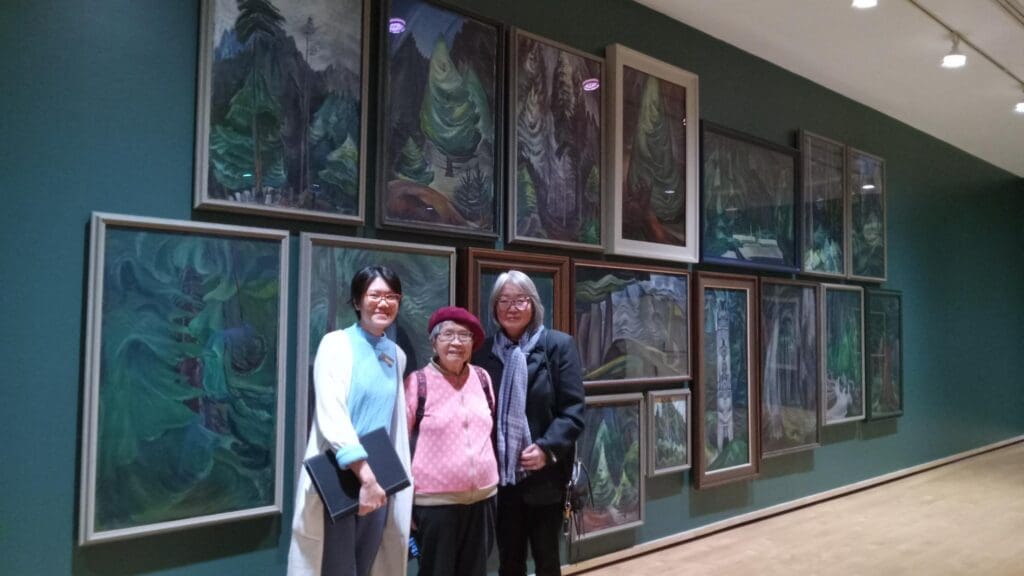
From left to right: Sherry Shen, Teacher Tsai, Dr. Grace Park
Of the more than 500 seniors serviced in Burnaby since our program’s inception, these are but few examples of the strengths and values shown by both Canadian-born & long-term immigrant (including some with refugee backgrounds) seniors. It is a reminder that, along with their frailty and possible challenges inherent to human aging process, they were builders of our society and continue to be beacons of valuable and strong members in our communities.
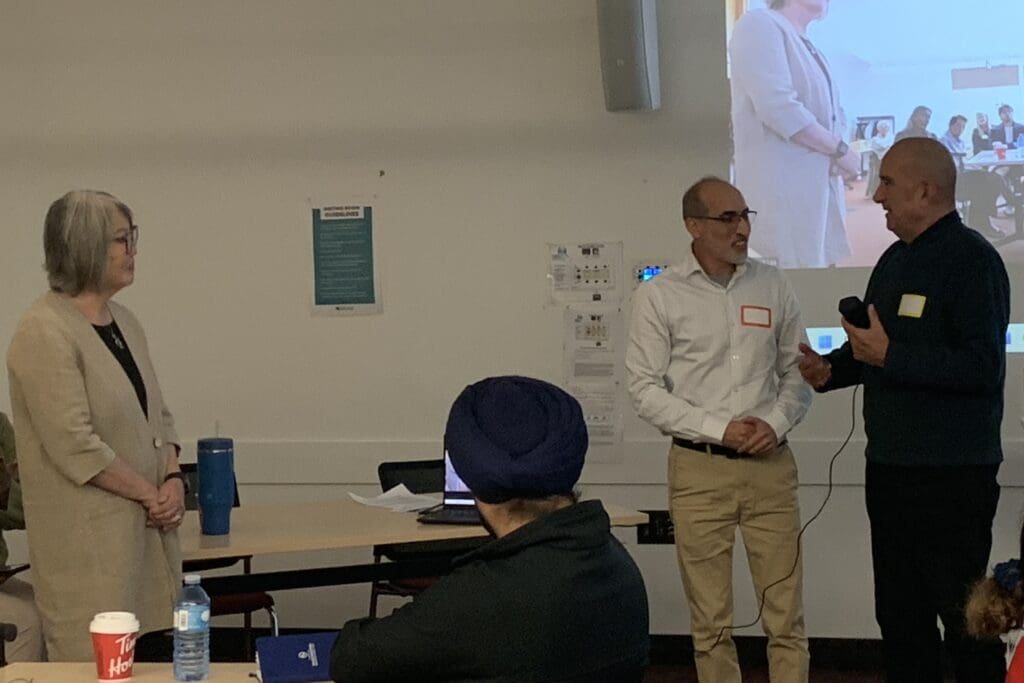
From left to right: Dr. Grace Park, Zarif Akbarian (program staff), Mr. Asef Shiba
Even as she nears the end of life, Ms. Hon continues to share her ever-so-calm and clear-minded wisdom: “Let it be known to all dying (cancer) patients: Do not be afraid of death, for it is the most natural thing in the world. Do not scare yourself to death once you find out you’ve got cancer. The doctors kept saying I’m lucky to have outlived other pancreatic cancer patients by 3-4 months. This is no luck, but simply, I’ve kept my peace with my cancer since I’ve gotten the diagnosis, and that’s all there is – Keeping peace with oneself.”
These are the wisdom and strength from a dying senior, and many more in our program – Canadians and immigrants, home owners and precariously housed, volunteers and grandparents – if only we choose to see them and the values in their existence and contributions.
*The name has been changed to protect the identity of the senior and said family members