From November 25 to December 10, MOSAIC joined communities across Canada in marking the 16 Days of Activism Against Gender-Based Violence. This year, our Violence Prevention teams centred the campaign on one question: How do we create space for women to be seen and heard on their own terms?
We began the campaign by sharing a staff-written reflection on why 16 Days matters for the diverse communities we serve, and how culturally informed support continues to be essential. This reflection set the tone for a campaign grounded in listening and collective experience.
Creating Space for Conversation
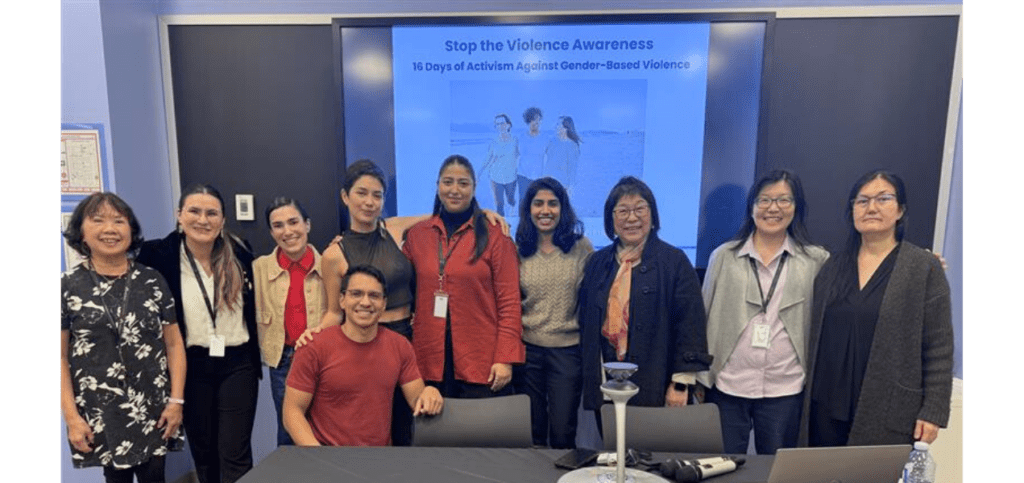
On November 28, the Violence Prevention teams hosted a community gathering that brought together learning, connection, and reflection. Each component offered a different entry point into the conversation on gender-based violence, helping participants connect knowledge with lived reality.
Activities included:
- A legal education session in partnership with Sinclair Centre Law, offering information on rights, safety planning, and navigating the legal system
- A dramatic reading of Stars on Pavement by Mexican playwright Carlos Arturo Aguilar, performed by Jessica Valencia, Miguel Guerrero, and Paulina Pino-Rubio, whose interpretation brought forward themes of power, vulnerability, and community support
- A grounding yoga session led by Fakhria Ibrahimi Momtaz of Momtaz Yoga, giving participants a moment to reconnect with themselves and settle into the space
Though varied in form, these components worked together to build understanding and trust, preparing the ground for the part of the campaign that resonated most deeply: stories shared through art.
Centred on Women’s Art
To highlight lived experiences in ways conversation alone cannot, MOSAIC issued a Call for Women Artists. Women were invited to submit works reflecting themes of identity, memory, restriction, resilience, and community.
The response was powerful. Each artwork held its own story, shaped by culture, history, and personal experience. Together, they formed a collective expression of resistance, reflection, and hope.
Below are the featured works, shared with permission and in the artists’ own words.
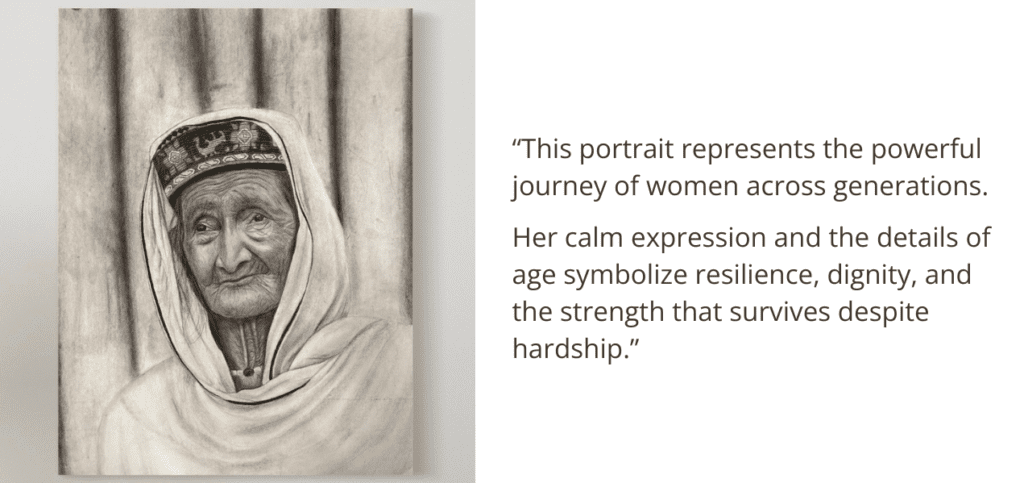
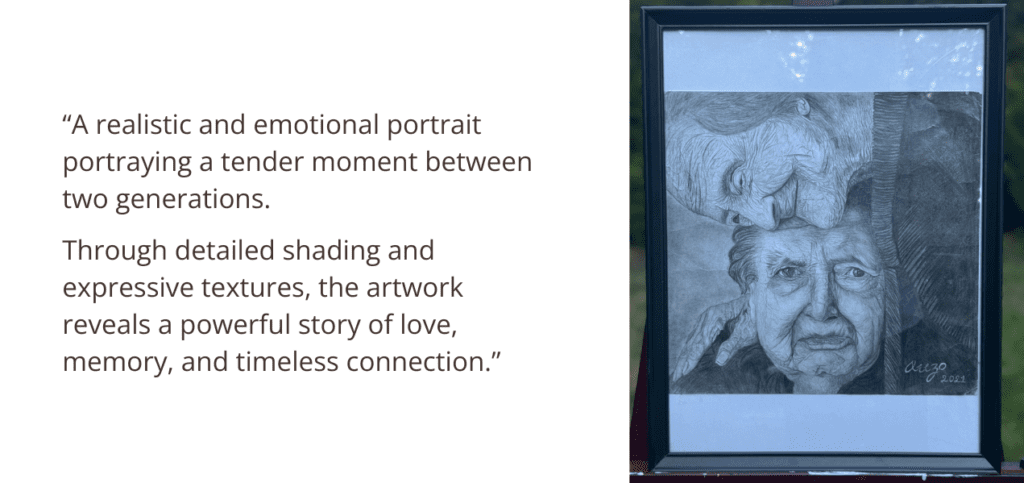
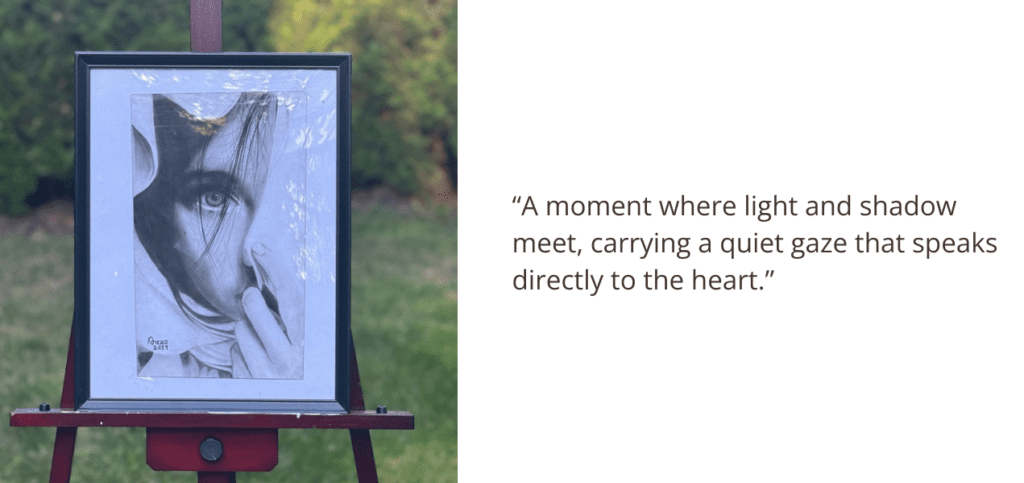
From Arezo Safari
Wisdom in Her Eyes
Medium: Charcoal
Whispers of Time
Medium: Pincel (brush)
The Silence of a Gaze
Medium: Charcoal
From Niousha Rezaeinia
La Sposa (The Bride)
Medium: Video (4:53), created in Iran
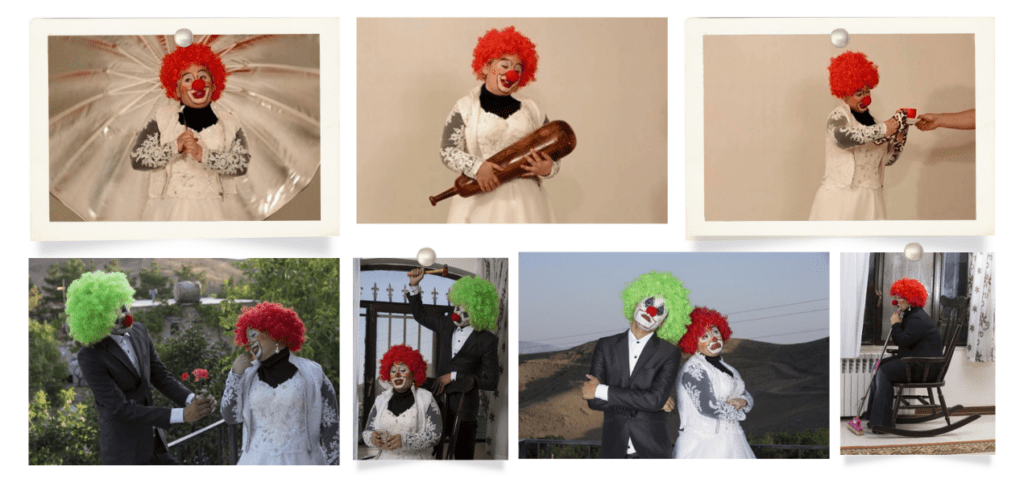
La Sposa explores and tells the story of Iranian women who have grown up and been influenced by Islamic culture.
“The woman appears wearing a wedding dress and a black shirt underneath, symbolizing mourning and suffering.
In the first scene, a woman appears happy and carefree as she plays with kitchen utensils; then a man enters, beginning to deceive her and ultimately leaving her alone.
This scene, expressed in an ironic way, reflects and bears witness to the reality of many women living under the Islamic regime, whose daily lives are shaped and restricted by Islamic laws—laws that reduce them to instruments in the hands of men. It represents a continuous cycle that forces women to become prisoners in a “game” created and controlled by men and by the State.
Presented with irony and artistry, La Sposa bears witness to the realities faced by many women and calls attention to their resilience and resistance.”
From Sahar Hosseini
The Women Are Still Alive
Medium: Air-dry clay sculptures, acrylic and powder paint
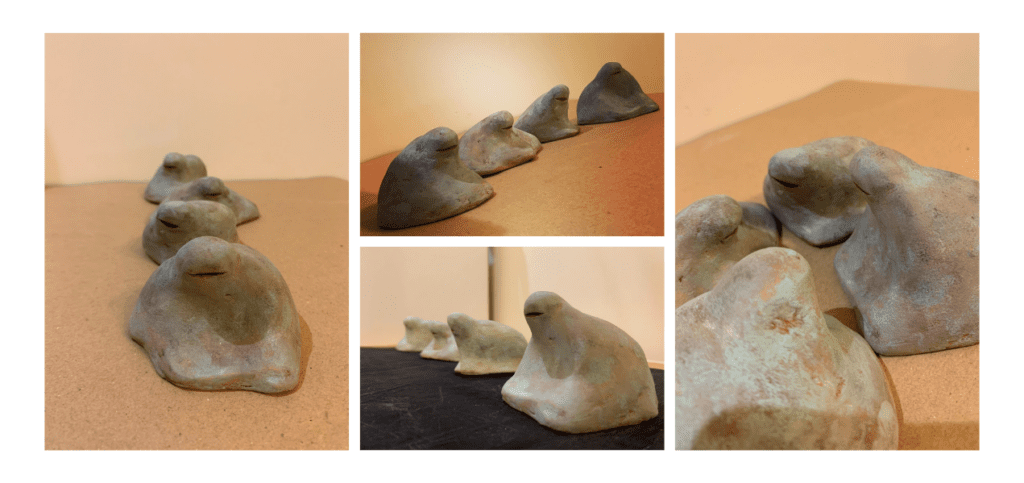
“In this work, I have shown women in the Middle East who, despite all the restrictions, pressures, and gender discrimination, are still connected and shout their existence under the veil and the cover they do not like. There is a gap in the head of each statue, which I used red, which symbolizes love, passion, and energy. These few characters are made as if they are gathered together and secretly and secretly talking about something special. The height of the statues is short and the female body is not visible, which is the same symbol of gender discrimination that women should not express their desires and dress freely. But despite all these restrictions, women have solidarity and unity, and even under a cover, there can be a life with hope.”
Carrying the Conversation Forward
By placing women’s artwork at the centre of this year’s 16 Days campaign, MOSAIC’s Violence Prevention teams highlighted the power of individual perspective in understanding gender-based violence. These works do not seek to represent all experiences; instead, they illuminate experiences shaped by culture, history, and lived reality, expanding the conversation with honesty and depth.
We extend our deepest gratitude to the artists, staff, facilitators, and community members who contributed their time, creativity, and care to this year’s campaign. Their work reminds us that the movement toward safety, dignity, and equity is built through many voices. Each distinct, each essential.
MOSAIC’s Violence Prevention services are available throughout the year.